Phone (443) 296-2866

Bakasana, Banana, Bandha—Wait, What?
Michelle Dhanoa | JUN 21, 2025
sanskritinyoga
yogaglossary
asanadecoded
yogalingo
sanskritdemystified
posenamesunpacked
bakasanatobandha
speakyogafluently
asanaanatomy
yogatraditionandterms
Bakasana, Banana, Bandha—Wait, What?
Ever caught yourself mid-flow wondering what on earth you just chanted? You’re not alone. Sanskrit may feel like a secret code, but it’s really the ultimate cheat sheet for unlocking the meaning—and the energy—behind every pose. Think of these words as the spice blend that turns a basic stretch into an immersive, body-mind journey.
In this post, we’ll:
- Demystify why Sanskrit shows up in your practice
- Share playful memory hacks so you never blank on a term again
- Drop a handy A–Z glossary of the most common Sanskrit roots you’ll see in asana names
Ready to turn your next “uh-oh, what did she say? ” into a confident “aha”? Let’s crack the code.
Why Sanskrit?
- Rooted in Tradition Sanskrit is the classical language of yoga’s birth. Using original terms connects us to centuries of practice, preserving both precision of movement and subtle energetic cues.
- Clarity in Cueing Each Sanskrit word is a compact description—“Adho” means downward, so Adho Mukha Svanasana literally tells you to press your face down to dog. No guesswork, just direct guidance.
- Energetic Resonance These syllables are more than sounds. They carry vibrational qualities believed to align your physical, mental, and spiritual layers as you move.
How to Remember Your Sanskrit
- Visual Associations Link animal names to the shape: imagine a proud peacock for Mayura (peacock) Pose.
- Mini Stories Craft a tiny mental scene—think of “Bow” (Dhanura) drawing an arrow in Dhanurasana.
- Chunking Tricks Break multi-syllable words into bite-sized pieces: Utthita (OO-thee-tah) Trikonasana becomes “Up-TEE-tah Tri-cone Pose.”
- Sing It Out Chanting mushes melody and meaning together. The next time someone cues Ananda (joy), you’ll literally feel smiles bloom.
Glossary Sanskrit words used in asanas
A
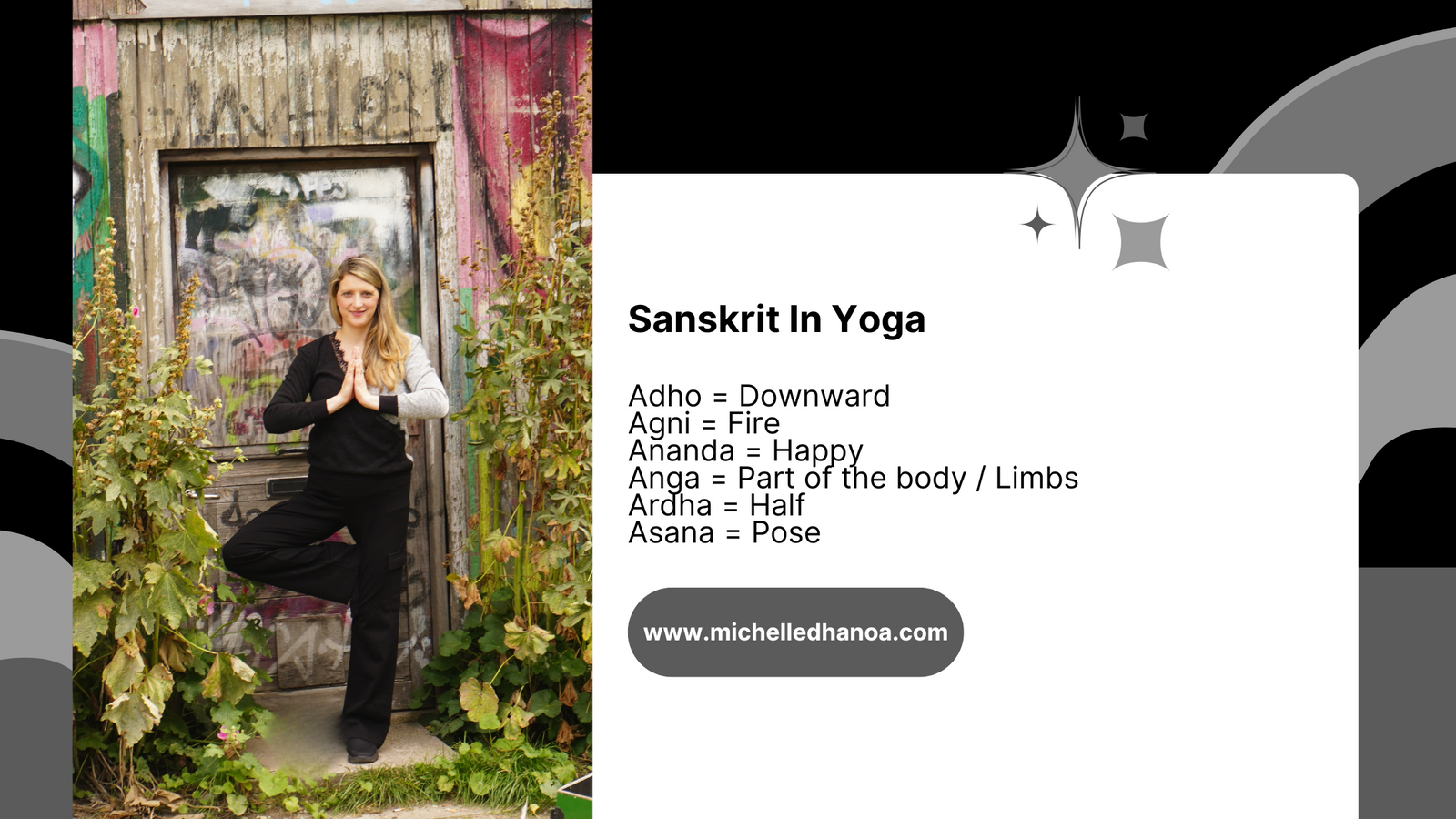
Adho = Downward
Agni = Fire
Ananda = Happy
Anga = Part of the body / Limbs
Ardha = Half
Asana = Pose
B
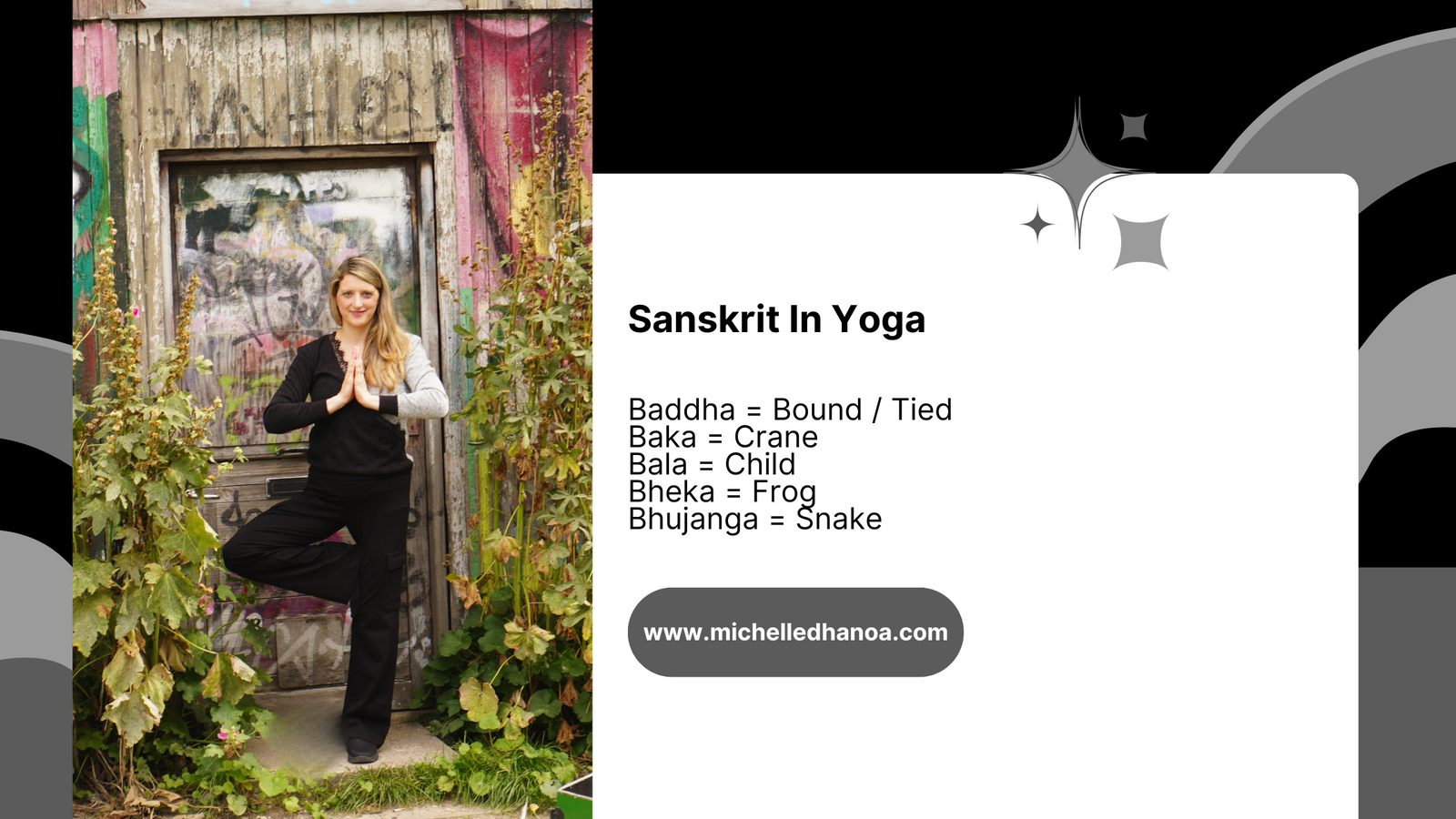
Baddha = Bound / Tied
Baka = Crane
Bala = Child
Bheka = Frog
Bhujanga = Snake
C
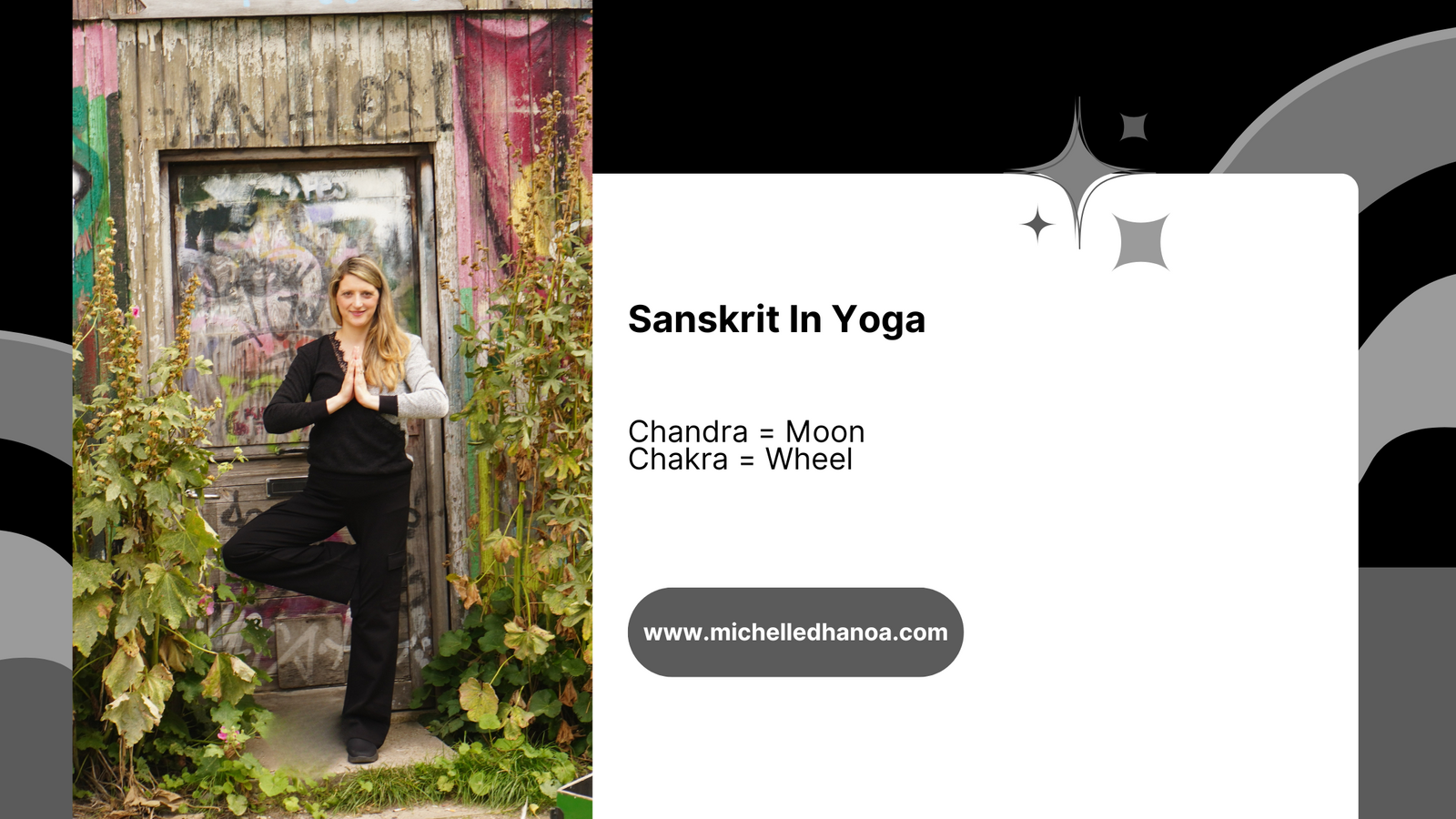
Chandra = Moon
Chakra = Wheel
D
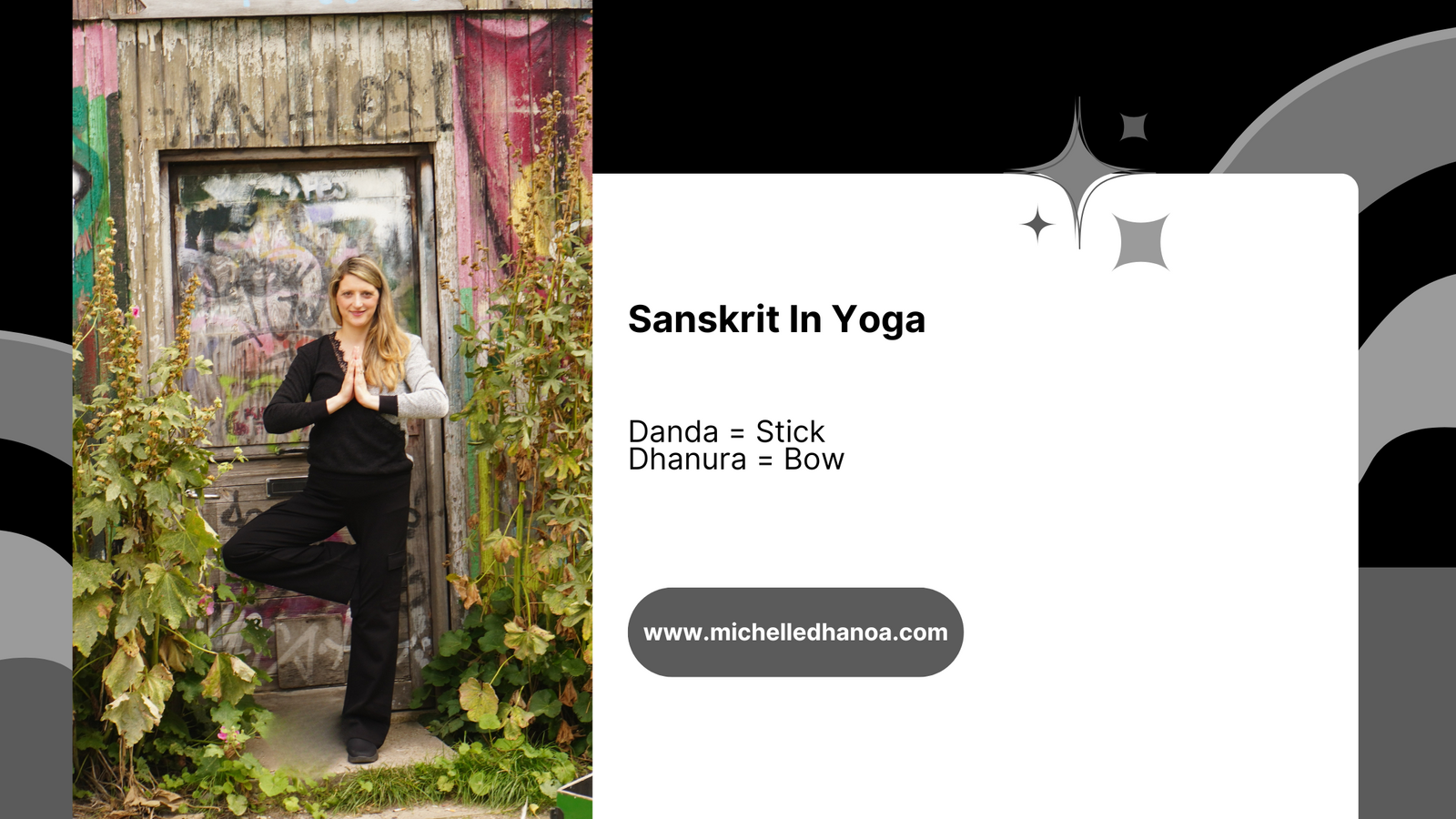
Danda = Stick
Dhanura = Bow
E
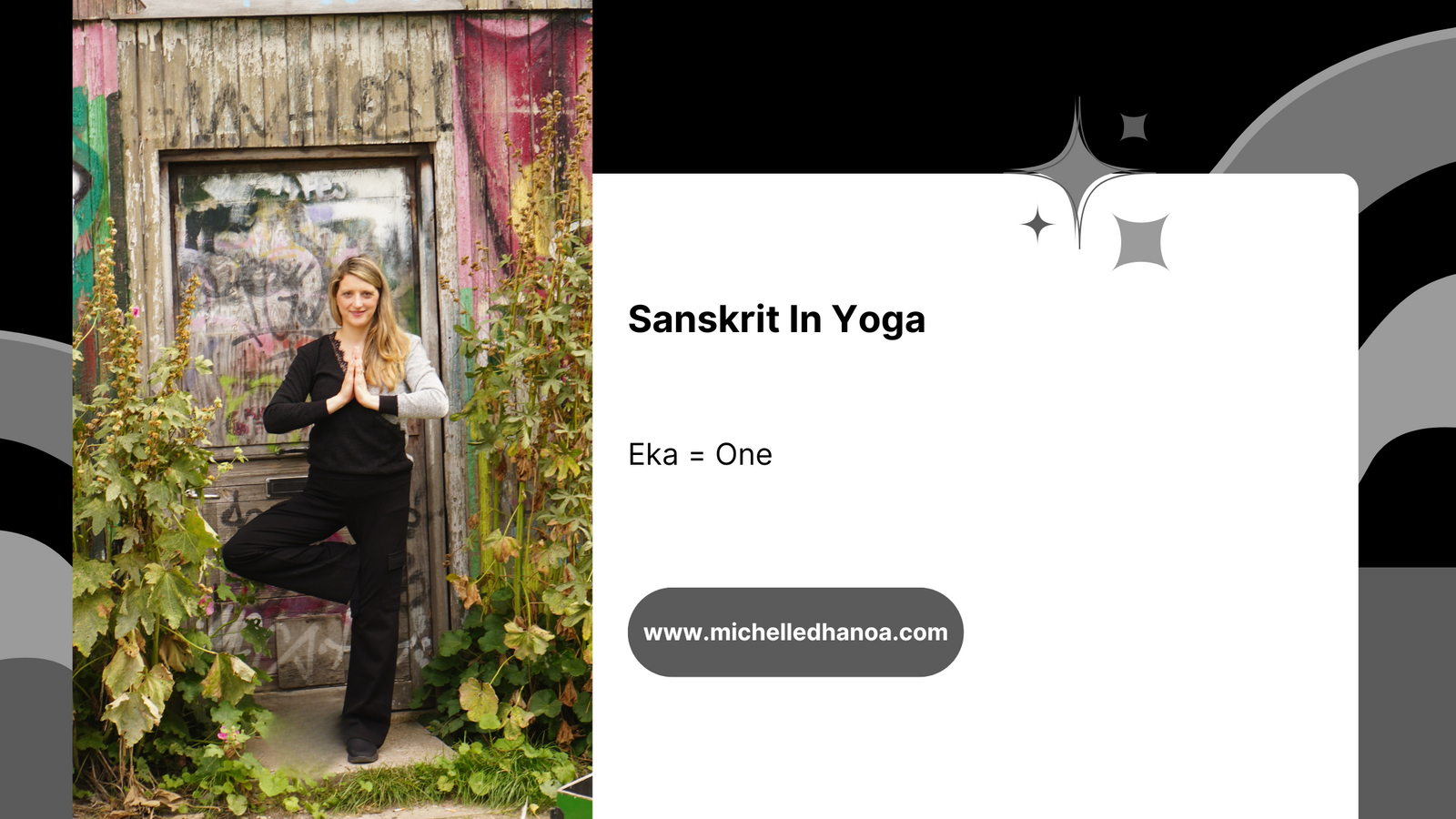
Eka = One
G
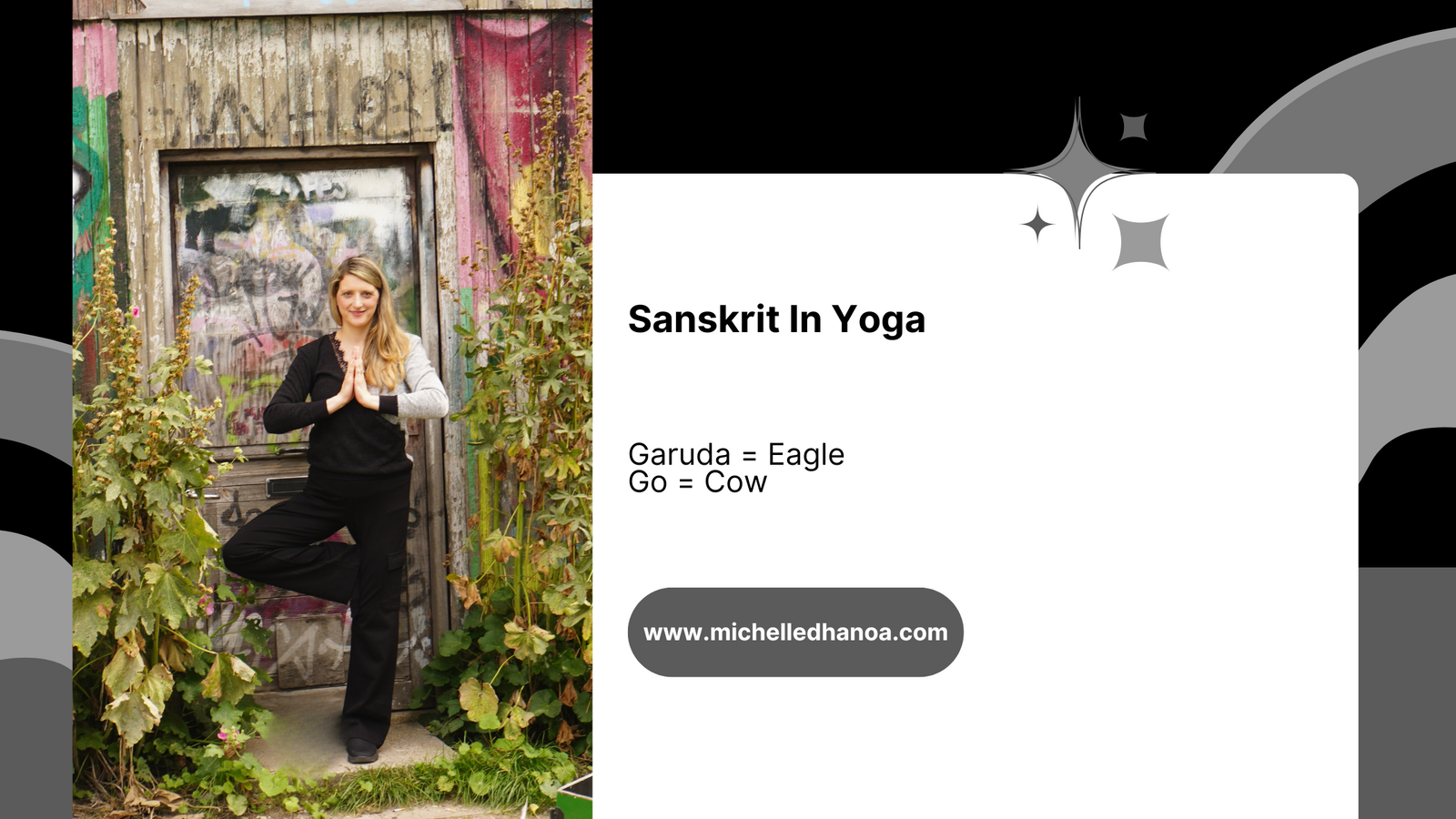
Garuda = Eagle
Go = Cow
H
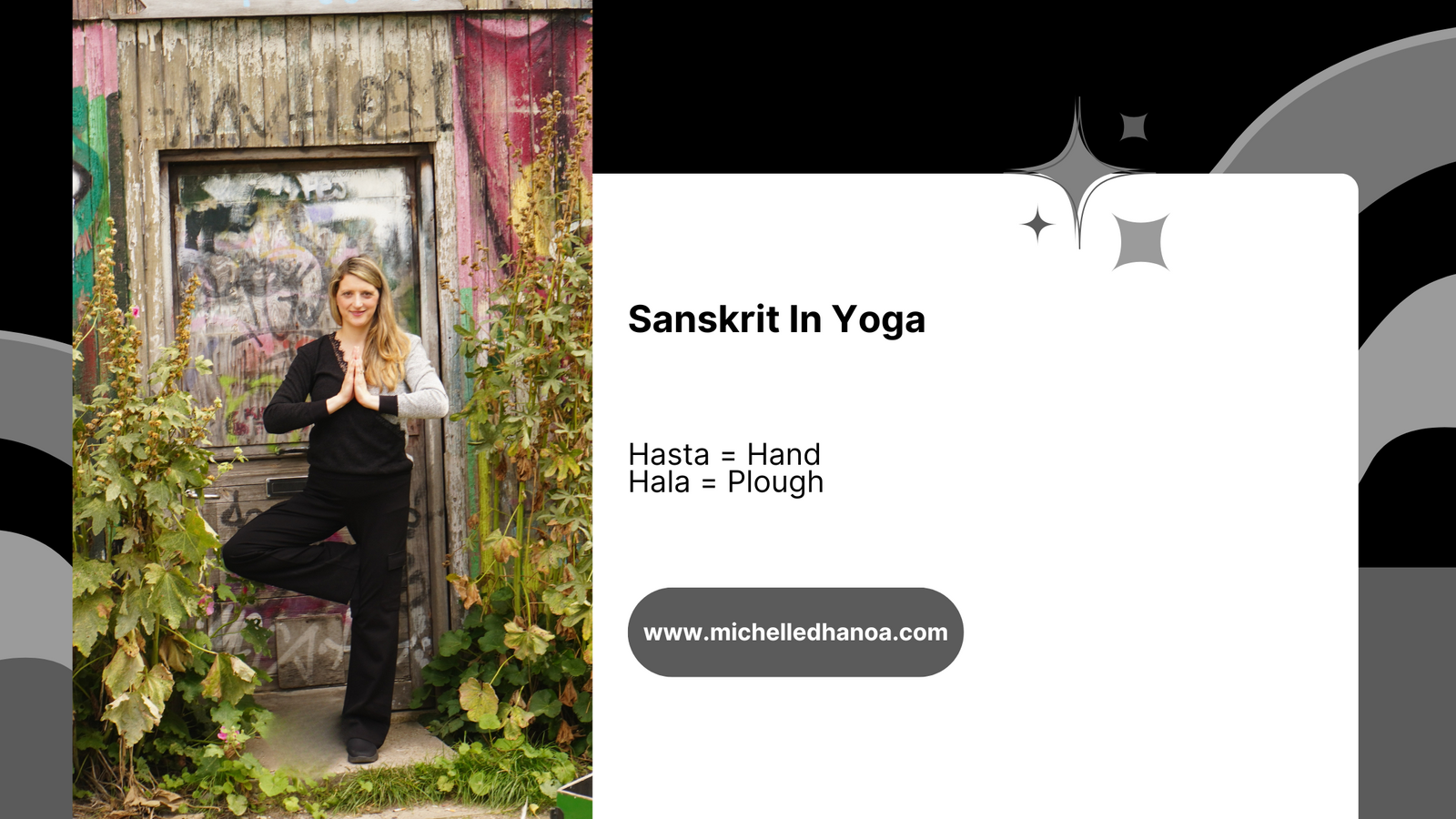
Hasta = Hand
Hala = Plough
J
Janu = Knee
K
Kona = Angle
Kaka = Crow
Kapota = Pigeon
Karna = Ear
Koundinya = Name of sage
Krouncha = Heron
Kukkuta = Cock
Kurma = Turtle
L
Lola = Dangle
M
Mala = Garland
Makara = Crocodile
Marichi = Name of sage
Matsya = Fish
Mayura = Peacock
Mukha = Face
Mukta = Free
N
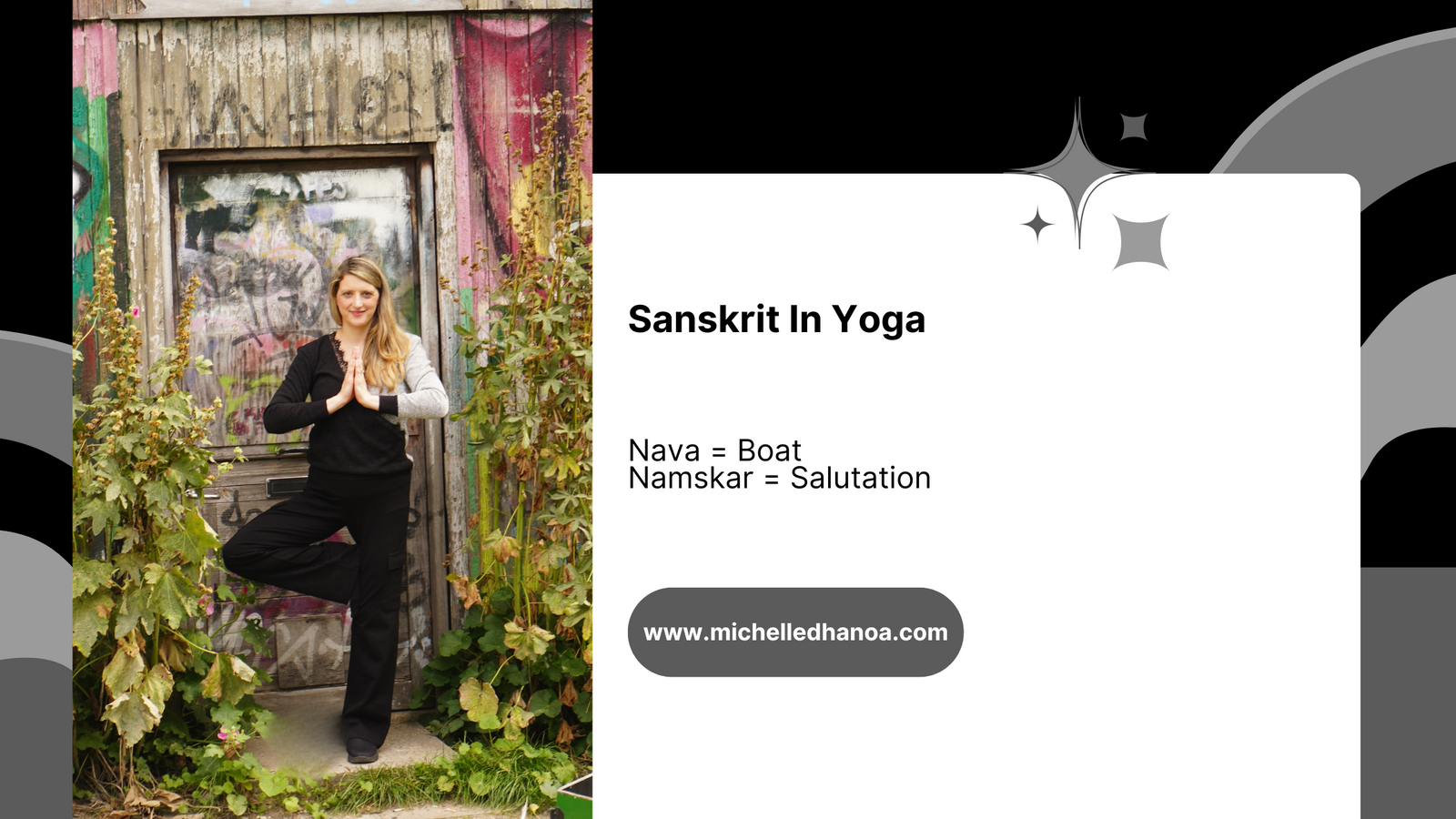
Nava = Boat
Namskar = Salutation
P
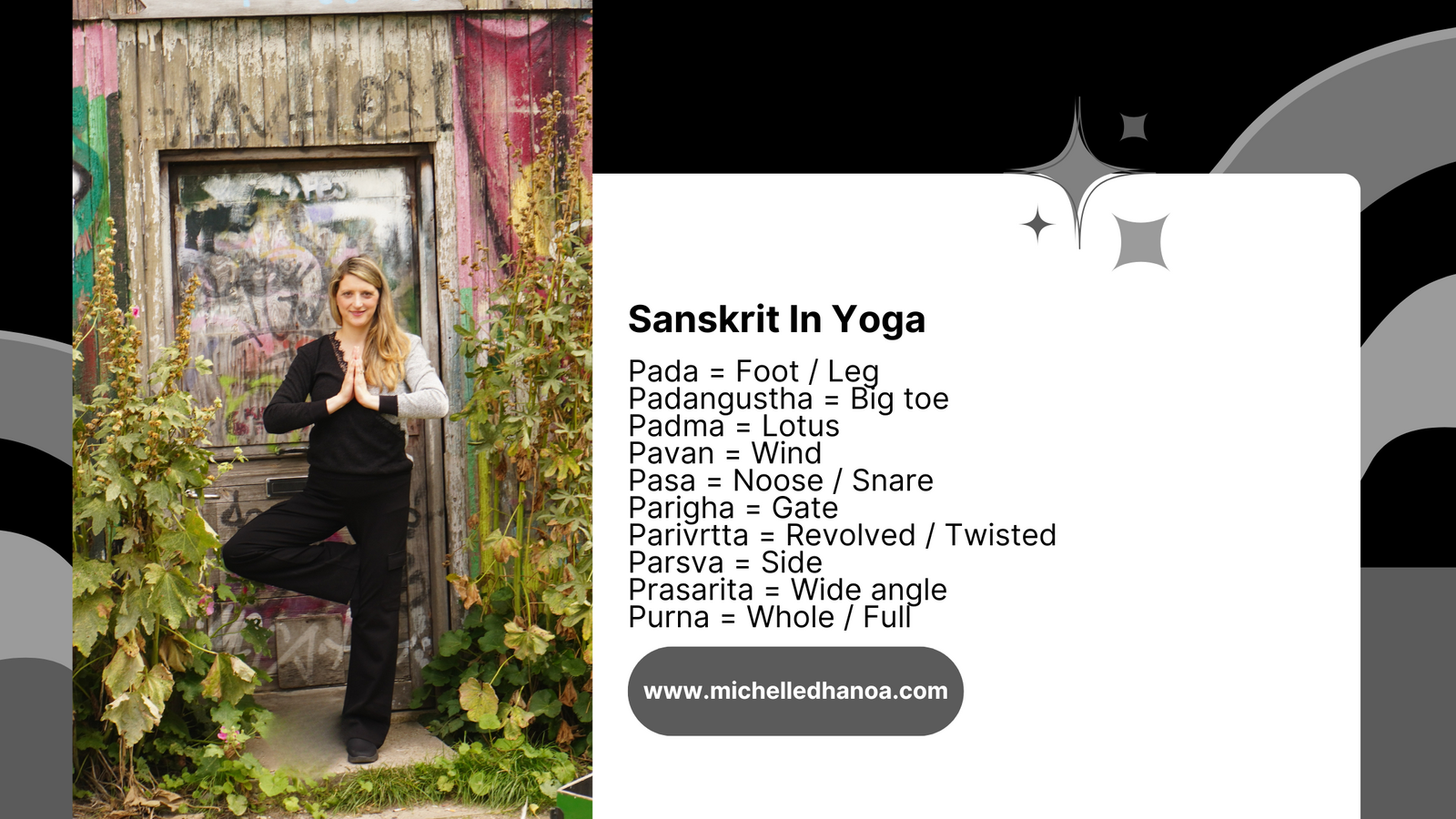
Pada = Foot / Leg
Padangustha = Big toe
Padma = Lotus
Pavan = Wind
Pasa = Noose / Snare
Parigha = Gate
Parivrtta = Revolved / Twisted
Parsva = Side
Prasarita = Wide angle
Purna = Whole / Full
S
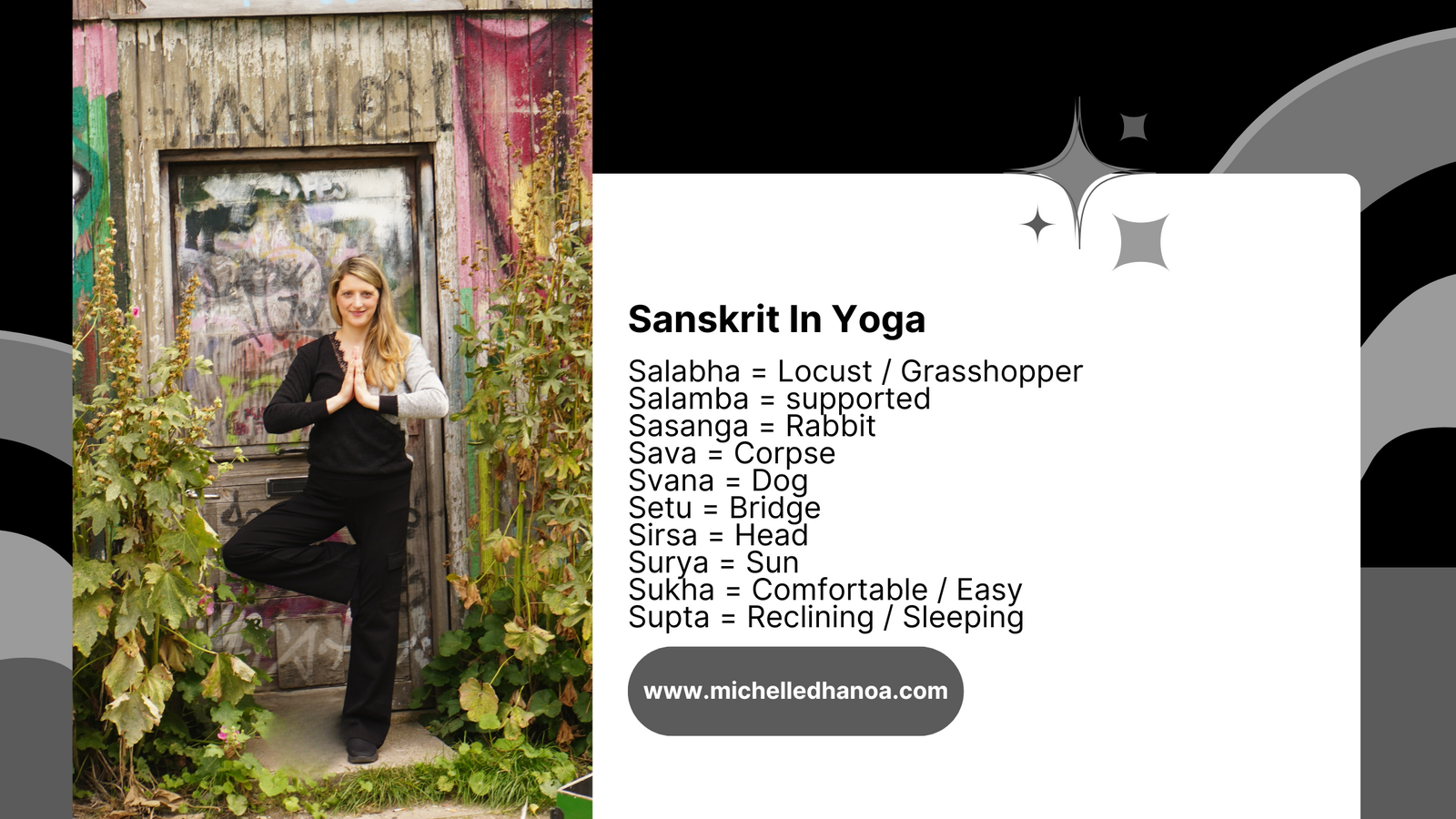
Salabha = Locust / Grasshopper
Salamba = supported
Sasanga = Rabbit
Sava = Corpse
Svana = Dog
Setu = Bridge
Sirsa = Head
Surya = Sun
Sukha = Comfortable / Easy
Supta = Reclining / Sleeping
T
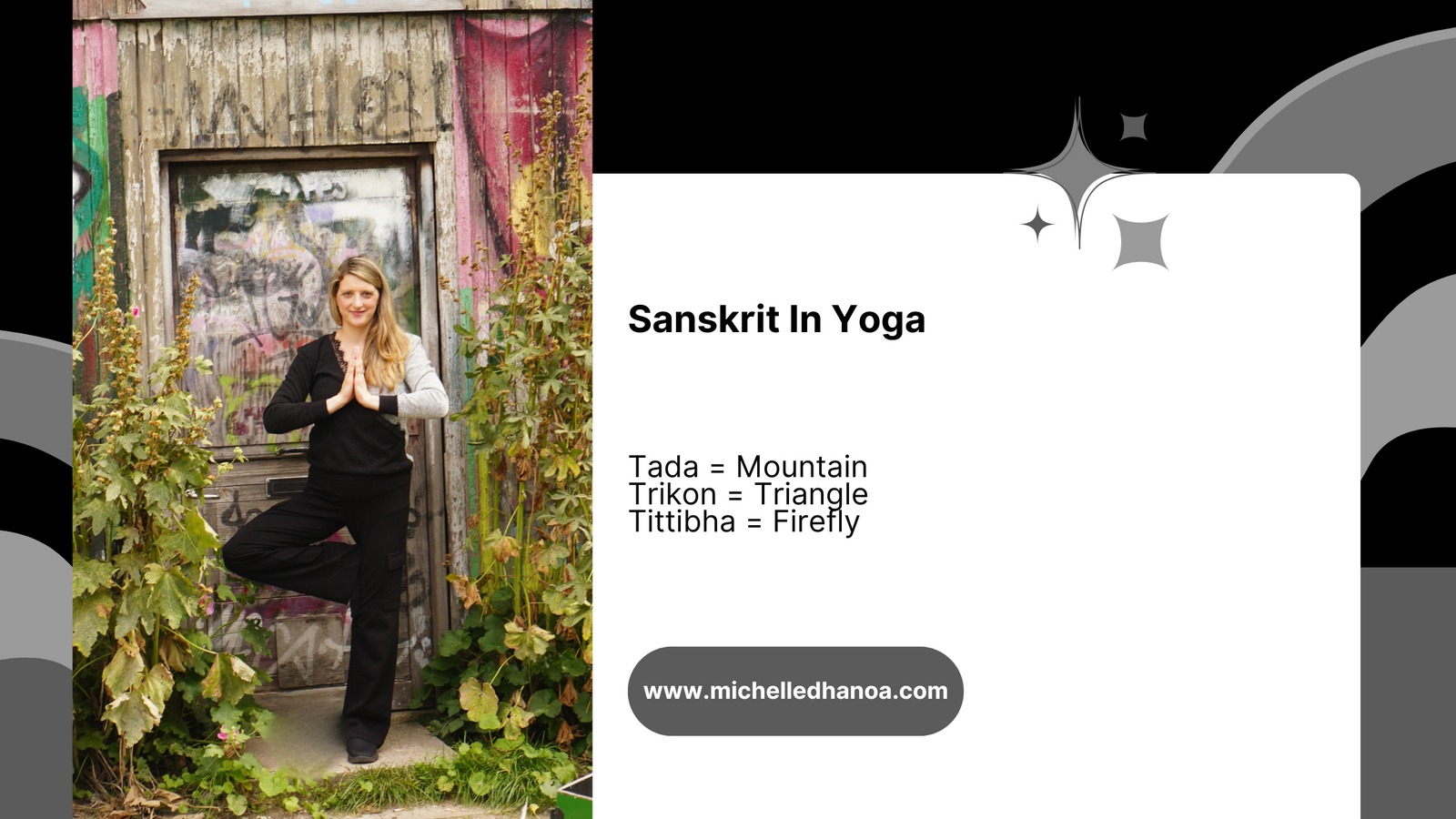
Tada = Mountain
Trikon = Triangle
Tittibha = Firefly
U
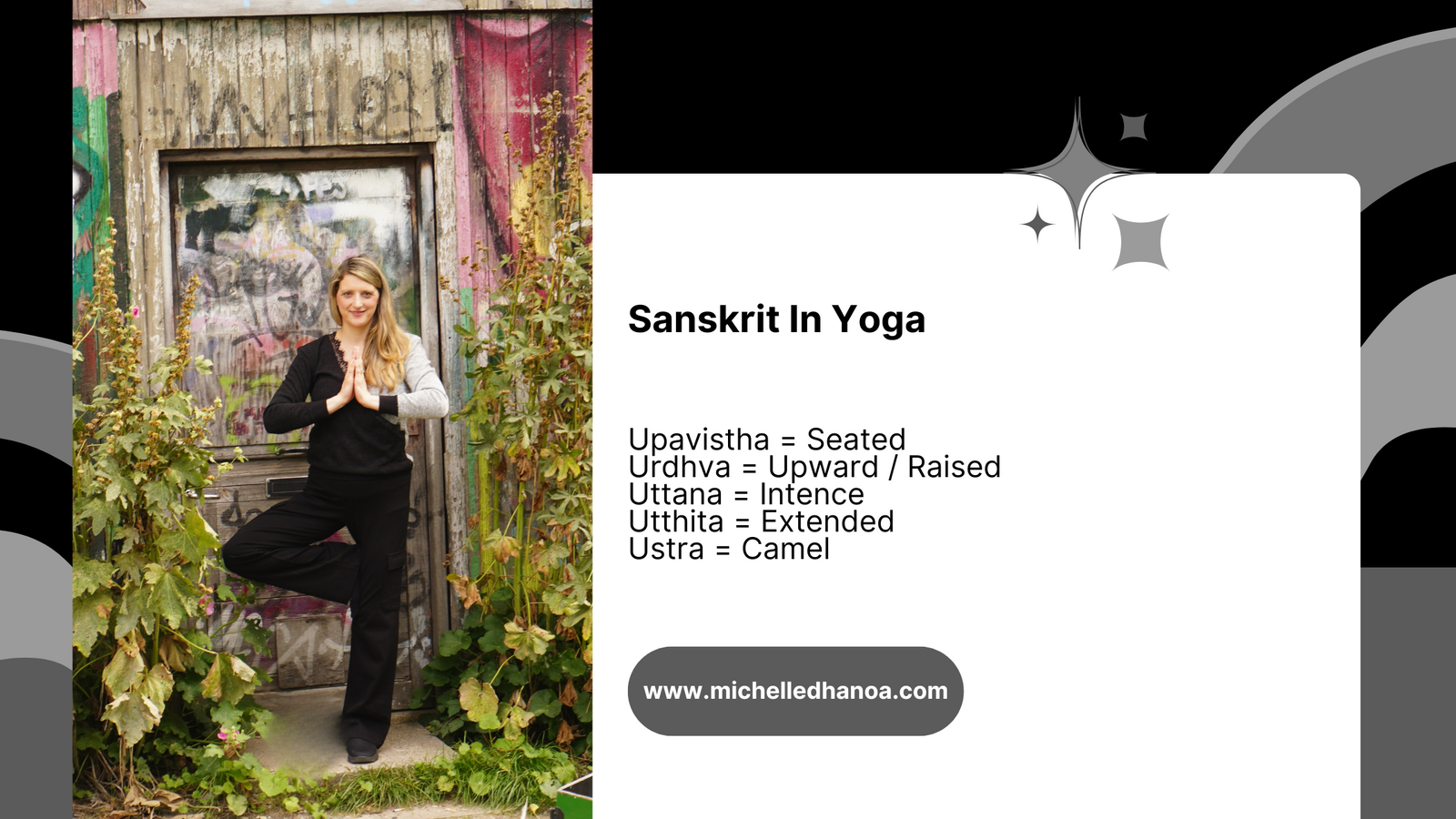
Upavistha = Seated
Urdhva = Upward / Raised
Uttana = Intence
Utthita = Extended
Ustra = Camel
V
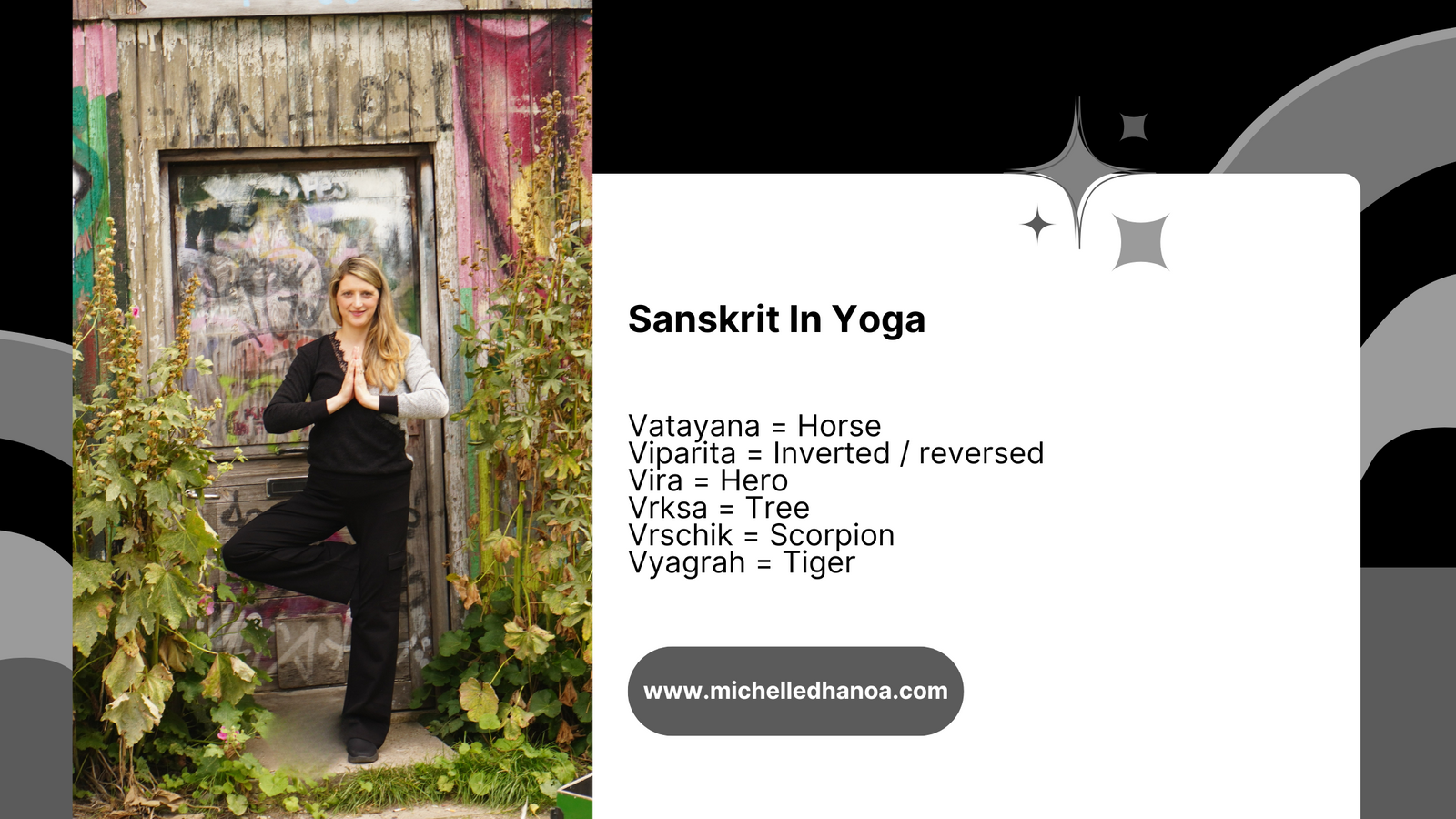
Vatayana = Horse
Viparita = Inverted / reversed
Vira = Hero
Vrksa = Tree
Vrschik = Scorpion
Vyagrah = Tiger
Takeaway
Next time you hear “Bakasana, Banana, Bandha,” you’ll crack a grin instead of a blank stare. You’ve got the secret decoder ring—now go play, explore, and let those Sanskrit syllables inspire every shape you strike.
Which word feels most fun (or most tongue-twisting) to you?
Drop it in the comments below, and share your best mental trick for nailing the pronunciation. Let’s keep the conversation (and the giggles) flowing on the mat!
Michelle Dhanoa | JUN 21, 2025
Share this blog post


© 2026 Michelle Dhanoa